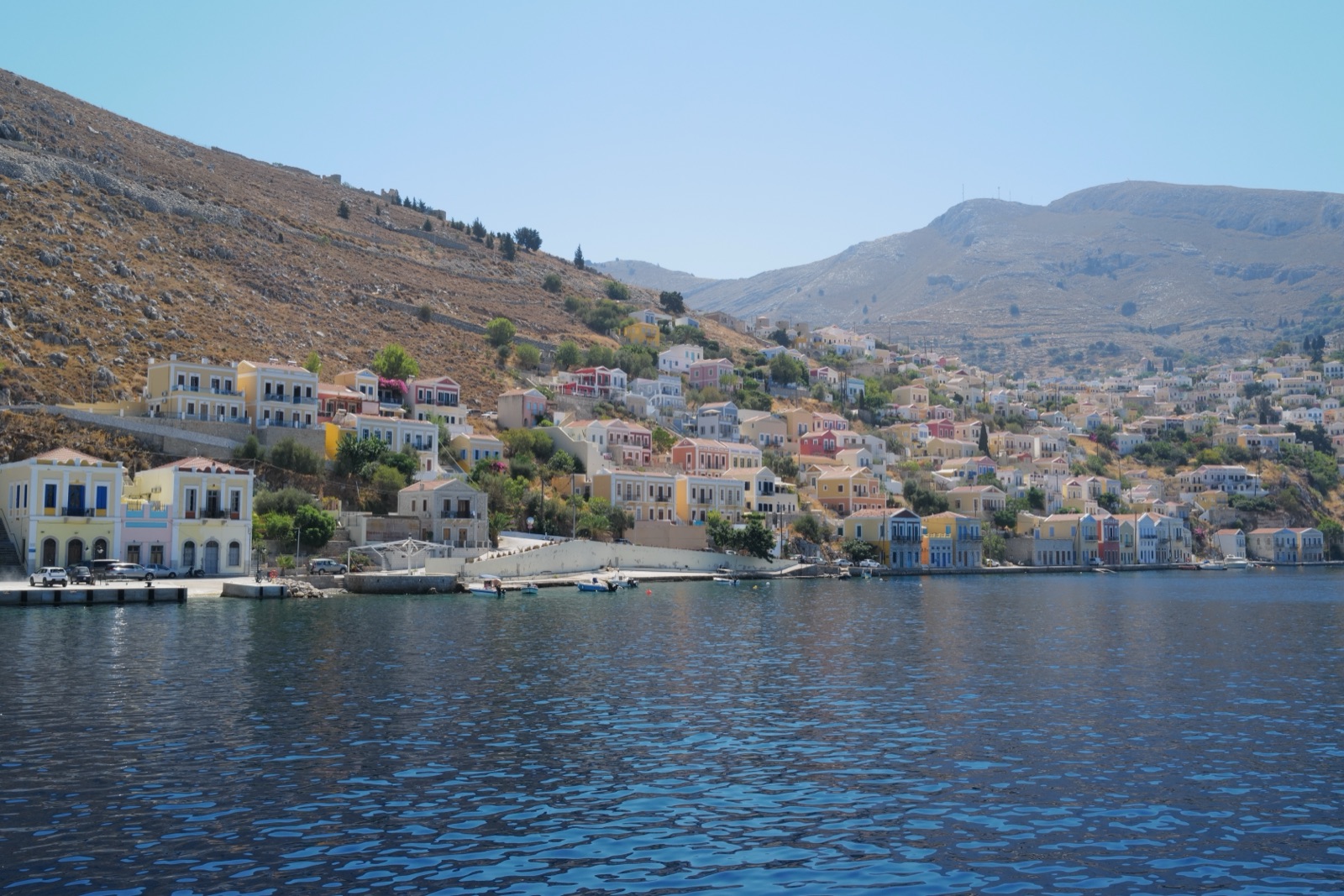
Where to Stay on Symi: Gialos, Horio, Pedi, Nimborio or Panormitis?
For most visitors the best place to stay on Symi is Gialos, the harbour town, where the ferries arrive, the tavernas line the quay and boats leave for the beaches from your doorstep. Choose Horio, the old upper town, if you want quiet lanes and views at sunset and do not mind the 500 steps. Choose Pedi, the bay over the hill, for a beach on your doorstep and a slower pace, and Nimborio if you want somewhere smaller still. Panormitis, in the far south, is for pilgrims and those who want the monastery to themselves after the day boats leave. Three to four nights is the ideal length of stay.
This guide compares each area, explains the trade-offs of the steps and the day-trip crowds, and covers how long to stay, when to book and how to get to your room with luggage.
The areas at a glance
| Area | Best for | Watch out for |
|---|---|---|
| Gialos | Convenience, ferries, restaurants, evenings | Day-trip crowds by day, harbour noise |
| Horio (Horio) | Views, quiet, old-town atmosphere | About 500 steps or a road detour to the harbour |
| Pedi | Beach, families, taxi-boats to nearby coves | Fewer restaurants, bus or walk to town |
| Nimborio (Emborios) | Peace, a pebble beach, walks | Very quiet, few services |
| Panormitis | The monastery, pilgrims, solitude | Far from everything, simple rooms |
First, decide how long to stay
The question of where to stay on Symi starts with how long. The island’s main ferry operator puts it bluntly: three to four nights is the sweet spot, two nights works, and one night is essentially a day trip with a bed attached.
- One night shows you the harbour after the day boats leave, which is the main reason to stay at all.
- Two nights covers the highlights plus one beach boat trip or Panormitis.
- Three to four nights lets you see the whole island at a comfortable pace: the boat-only beaches, Panormitis without rushing, the castle and the walks.
- A week gives you time to return to favourite beaches and explore the hidden corners.
The reason is simple. Around six in the evening the day boats leave Gialos and take several hundred visitors with them, and the harbour empties. Shopkeepers sit outside, the light softens on the mansions, and the island becomes a different place. Staying lets you see that version of Symi, and reach the places a day trip cannot: Agios Georgios Dysalona, Nanou, Agios Vasilios and Maroni, none of which has road access.
Gialos: the harbour town
Gialos (also spelled Yialos) is where nearly everyone stays on a first visit, and for good reason. It is the most convenient and the liveliest part of the island. The ferries from Rhodes arrive here, the taxi-boats to the beaches leave from the middle of the quay, and the bus terminal and taxi rank are on the south side of the harbour. Restaurants, cafés, bakeries and shops are all within a few minutes’ walk.
What it is like
The harbour is lined with the tall neoclassical mansions that make Symi famous, built in the 19th century on the wealth of the sponge trade. Many of the houses on the slopes have been restored as holiday homes, guesthouses and small hotels, and restorations must follow guidelines from the Greek Archaeological Service, so the character of the town survives. Rooms range from simple studios to restored captains’ houses with terraces over the water.
Pros
- Step off the ferry and walk to your room.
- Boats for every beach leave from the quay.
- The widest choice of tavernas and evening life.
- Flat walking around the harbour, about 20 minutes from the bus station to Nos beach.
- Nos beach, the town beach, is about 15 minutes’ walk from the ferry port, past the clock tower.
Cons
Gialos is where most visitors gather during the day, so expect crowds on the quay from late morning until the boats leave. Rooms on the waterfront can be noisy with boat engines early and diners late. Rooms on the slopes above the harbour are quieter, but “a few steps up” on Symi often means many steps, so ask how many before you book.
Who it suits
First-time visitors, anyone staying only one or two nights, those who want to eat out every evening, and anyone who does not want to plan transport.
Horio: the upper town
Horio (Horio, or Ano Symi) is the old town on the ridge above the harbour, reached by the Kali Strata, a stone stairway of about 500 steps, or by road. It is quieter and more residential than Gialos, with churches dating from Byzantine times, the Archaeological Museum, the ruins of the Knights’ castle, and views that are at their best at sunset.
What it is like
Horio is a maze of narrow cobbled lanes, often stepped, with pebble-mosaic courtyards and mansions, some beautifully restored and some still in ruins. In the evening, when the day-trippers have gone, it is one of the most atmospheric places to stay in the Dodecanese. A handful of tavernas and bars around the top of the Kali Strata keep you fed without going down to the harbour.
Pros
- Quiet nights and old-town atmosphere.
- Wide views over the harbour and the sea, especially at sunset.
- Close to the castle, museums and churches.
- The bus to Pedi and down to Gialos stops at the edge of the village.
Cons
The steps are the whole issue. The ferry operator’s own advice is that Horio’s 500 steps are a real daily consideration if you are carrying luggage, travelling with children or have mobility concerns. The climb takes around 20–30 minutes with little shade. There is road access, but cars cannot enter the lanes, so you will still walk the last part to your door. Coming home from dinner in Gialos means the climb or a taxi.
Who it suits
Couples, returning visitors, walkers and anyone who values peace and views over convenience. If you choose Horio, ask your host about luggage on arrival; many will arrange a taxi to the nearest point on the road.
Pedi: the beach bay
Pedi lies over the ridge from Gialos, at the head of a green valley about 2 km from town. Its bay has a sandy beach with sunbeds and umbrellas, a fishing quay and a small cluster of houses. The ferry operator calls it the island’s most popular beach settlement, and it is the starting point for the caiques to the nearby coves.
What it is like
Pedi is calm and low-key: two tavernas and a small shop on the bay, a large beach hotel of some 56 rooms, and villas and apartments up the valley. The beach has a shower, changing room and toilet and is rated family-friendly. From the jetty, a small taxi-boat runs to Agios Nikolaos and Agia Marina, and the coastal path to Agios Nikolaos takes about 20 minutes on foot.
Pros
- Swim before breakfast.
- Calm, shallow beaches nearby for children.
- The bus to Horio and Gialos runs hourly, about 20 minutes to the harbour.
- Quieter than Gialos even at the height of summer.
Cons
The choice of restaurants is small, and the evening action is in Gialos. The walk to town is a climb: about 30–40 minutes up the valley to Horio, and about 45 minutes from Gialos via Horio. After the last bus you will need a taxi, and taxis are in limited supply in the evening, so book ahead.
Who it suits
Families, beach lovers and anyone staying a week who wants a base by the sea with town within easy reach. The Pedi guide covers the bay and its beaches in detail.
Nimborio (Emborios): the quiet harbour
Nimborio, also called Emborios, is the island’s second harbour, smaller and more relaxed, on the coast west of Gialos. It has a large pebble beach and, just inland, the “Twelve Caves”, twelve Byzantine domes once used as painting and sculpture workshops.
What it is like
Nimborio is a small seaside settlement with a few houses for rent and very little else. It is 3 km from Gialos along the coast road, or 2.3 km by the inland path, and its pebble beach is described as reachable on foot from the port in about 15–20 minutes. Neither of the island’s bus routes goes there, so a car, scooter or taxi helps if you are not a walker.
Who it suits
People who want real peace, walkers, and repeat visitors who know the island. It is less suited to a first, short stay.
Panormitis: the monastery
Panormitis, in a sheltered bay in the south-west of Symi, is home to the monastery of the Archangel Michael, the island’s most important pilgrimage site. Two rows of buildings along the shore, built after the Second World War, hold holiday flats for visitors and a bakery, and the monastery’s guest house can host up to 500 people. The bay has a small sandy beach and a couple of tavernas and shops.
What it is like
By day, Panormitis fills with day-trippers from Rhodes. When they leave, it is one of the most peaceful places on the island: the bell tower, the courtyard and the bay are yours. Accommodation is simple, and you are a 40-minute bus ride or a taxi from town, with buses only a few times a day.
Who it suits
Pilgrims, especially around Panormitis Day on 8 November, when the monastery celebrates its annual feast and pilgrims arrive from across Greece; anyone who wants a night of silence; and walkers heading for the south of the island. Book well ahead for the feast. The Panormitis guide covers the monastery itself.
Marathounta and the rest
Symi’s other settlements are very small. Marathounta, a pebble bay on the east coast, has facilities and a couple of places to eat and is one of the few beaches reachable by road. A few villas and houses for rent are scattered elsewhere, mostly in the valleys above Pedi and along the Nimborio road. These suit people with a car who know exactly what they want.
When to book
Symi has a short, busy season. It runs from Easter to Panormitis Day in early November, when visitors raise the population to as many as 6,000. July and August are hotter and much busier, and the best rooms on the harbour and in Horio go early. May, June, September and early October offer warm sea temperatures and pleasant weather, and more choice.
Book your room and your ferry together. In July and August, book the ferry as early as possible; in May, June and September there is usually more flexibility, but always check the return sailing before you confirm. Remember that the only way to Symi is by sea, and that port authorities can stop sailings in bad weather, so leave slack before an onward flight from Rhodes. The getting to Symi guide covers the routes.
Outside the season, from November to Easter, many guesthouses and tavernas close and the taxi-boats stop. Symi in winter is quiet and local, with most of the year’s rain falling from November to February.
Getting to your room
Plan your arrival before you travel, because Symi’s steps do not forgive heavy bags.
- Gialos: usually a walk from the boat. Ask how many steps lie between the quay and your door.
- Horio: take a taxi or the bus to the top and walk from the road, or arrange a pick-up with your host.
- Pedi: the bus runs on the hour from Gialos if you travel light; a taxi if you do not.
- Nimborio and Panormitis: a taxi, unless you have hired a car.
Pack a bag you can carry up steps. A soft holdall is easier than a large wheeled case on Symi’s cobbles.
What to look for when you book
- Steps. Ask the exact number from the nearest road or the quay.
- Air conditioning. August maximums at nearby Rhodes average 30.7 °C, and Symi’s harbour is a heat trap.
- A terrace or roof. Many old houses have one, and the views are the point.
- Kitchen. Useful for a longer stay; Gialos has bakeries and small shops.
- Payment. Small island businesses do not always accept cards, so ask, and bring cash.
- Quiet. Waterfront rooms in Gialos are lively until late.
Eating out from each base
Where you sleep shapes where you eat. Gialos has by far the widest choice, from simple tavernas on the quay to restaurants in restored mansions, and it is where most visitors spend the evening. Horio has a few tavernas and bars around the top of the Kali Strata and in the lanes, enough for most nights, with the walk down to the harbour as an option. Pedi has two tavernas and a small shop on the bay, and the beach tavernas at Agios Nikolaos and Agia Marina by day. Nimborio and Panormitis have very little in the evening.
Whichever base you choose, try the island’s own dishes: Symi shrimp, tiny and fried crisp to be eaten whole, as well as atherinopita, akoumia, prickly pear liqueur and traditional Symi cheese pies. Small beachfront tavernas do not always accept cards, so carry cash.
Day trip or stay?
If a day trip is all your schedule allows, it is still a good day. Boats from Rhodes run from May to October and typically give 3–5 hours of free time on the island; the tours page lists them. But if you can, stay. The best of Symi happens after the boats leave, and on the beaches and paths that a few hours in town cannot reach. The things to do on Symi guide will help you fill the days.
Frequently asked questions
What is the best area to stay on Symi?
Gialos for convenience and evenings, Horio for views and quiet, and Pedi or Nimborio for a slower pace by the sea.
Is it better to stay in Gialos or Horio?
Gialos is easier: the ferries, boats, bus and restaurants are all on the harbour. Horio is quieter with better views, but it is about 500 steps above the harbour, which matters with luggage, children or limited mobility.
How many nights do you need on Symi?
Three to four nights is ideal. Two nights covers the highlights plus one beach boat trip or Panormitis; one night is little more than a long day trip.
Can you stay at Panormitis Monastery?
Yes. Holiday flats along the shore are run for visitors, and the monastery’s guest house can host up to 500 people. Book early for the feast on 8 November.
Is Pedi a good base on Symi?
Yes, especially for families and beach lovers. It has a sandy beach, taxi-boats to nearby coves and an hourly bus to Horio and Gialos, though fewer restaurants than the harbour.